
Paint Protection Film (PPF) in Dubai
Transparent, self-healing TPU film for maximum paint protection from chips, scratches, chemicals and debris
Pick-up and recovery available on request.
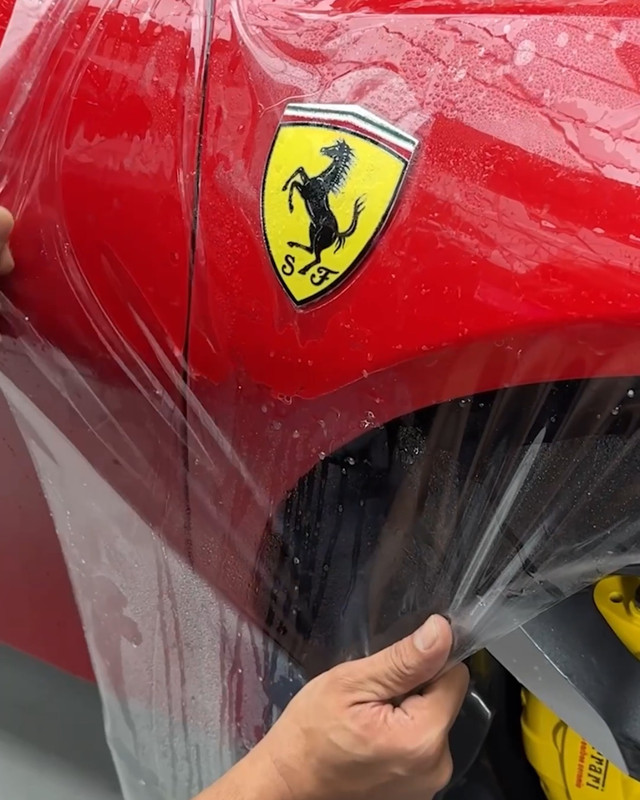
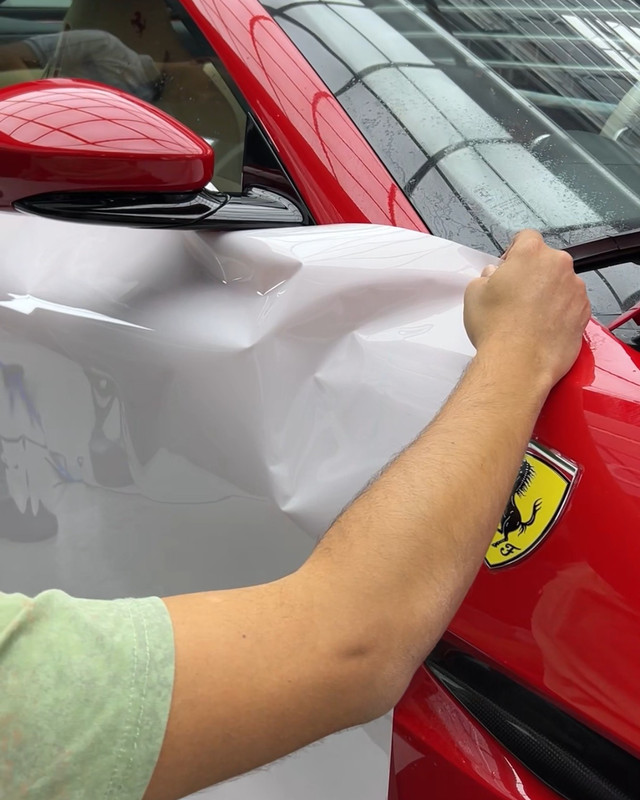
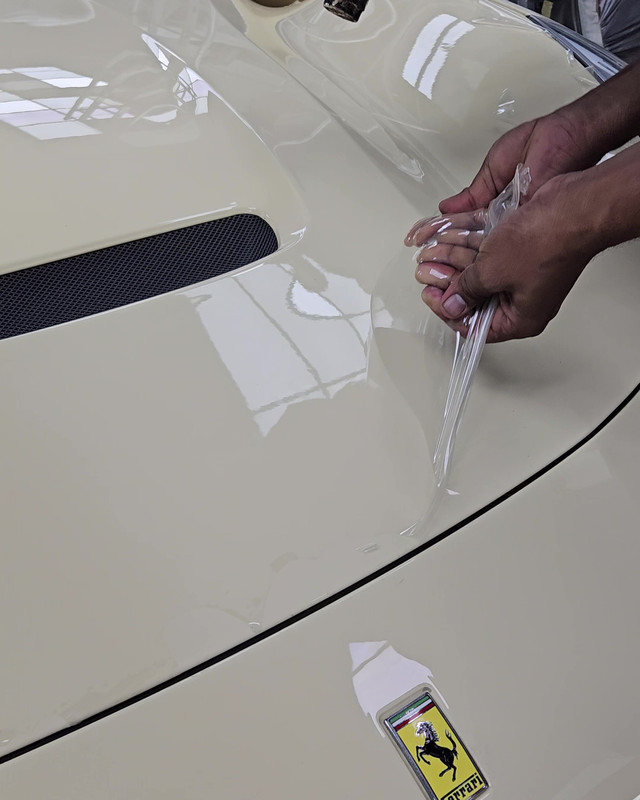
Paint protection film is a clear polyurethane (TPU) layer applied over the paint. It absorbs stone chips and light scratches, resists chemicals and UV, and light swirls in the film disappear with heat. The result depends on preparation and fitting: we correct the paint first, then apply the film by hand, wrapping the edges where the panel allows.
Stone chips are the most common paint damage on cars driven on Dubai highways. Once the paint is chipped, the only fix is a paint repair. Film protects the original finish before that happens. Because the film is transparent, any defect underneath stays visible — that is why we correct the paint before fitting.
What’s included
- Coverage options: front end (bumper, bonnet, wings, mirrors), full front, or full body
- Gloss or matte/satin film
- Paint decontamination and correction before fitting
- Hand-applied fitting, edges wrapped where possible
- Trims and badges removed where required for clean edges
- Headlights, door cups, sills and other high-impact areas
- Optional ceramic coating on top of the film
- PPF removal, including old and low-quality films
Not all film is the same — and not all of it is even TPU
A modern paint protection film is a stack, and each layer does one job:
Top layer — self-healing clear coat. An elastomeric surface that re-flows with heat, so light swirls and fine scratches disappear in the sun or with warm water. Films without it stay scratched.
Core — TPU (thermoplastic polyurethane). The part that absorbs impacts. Good TPU is elastic: it stretches over curves without stress marks and keeps its clarity for years. Cheaper films use PVC or a hard TPU that will not stretch — on a complex bumper those either leave relief lines and lifted edges, or need so many cuts that the installation becomes visible.
Adhesive. Usually acrylic. It has to hold for years at 60 °C on a black bonnet in the sun, and still release without pulling the paint when the film is removed.
Liner. Removed at installation.
What that means in practice: a film chosen for a matte bumper is not the film for a bonnet on a car that lives on Sheikh Zayed Road, and the sun in the UAE is a brutal ageing test for both the topcoat and the adhesive. We work with films whose behaviour we know — stretch, yellowing resistance, healing temperature, adhesive strength — and we will tell you which one suits the car and the budget, instead of selling one product for every situation.
PPF removal: what to expect
We remove any film — ours or someone else’s. The process is controlled heat, slow peeling at the right angle and adhesive residue cleaning, panel by panel.
Two cases take longer and carry more risk, and you should know that before we start. Old film that has been on the car for many years in this climate: the topcoat has become brittle, so it tears into small pieces instead of peeling in sheets, and the adhesive has hardened. Low-quality film, where the adhesive is aggressive or has degraded unevenly.
The risk is not the film, it is what is under it: on original, healthy paint a careful removal leaves the paint intact; on a panel that has been repainted — especially a repaint with poor adhesion or a soft, under-cured clear coat — film removal can lift the paint. That is why our inspection starts with a paint-thickness reading to establish whether a panel is original or has been repainted before, and why we tell you the risk on that specific car before touching it.
PPF vs wrapping vs peelable paint
| Paint protection film (PPF) | Vinyl wrap | Peelable paint | |
|---|---|---|---|
| Paint protection | High — designed to absorb stone chips and scratches | Light — covers the paint, limited impact protection | Moderate — a thick sprayed layer, better than vinyl against chips |
| Gloss / finish | Clear gloss or matte; keeps the original colour | Widest choice: gloss, satin, matte, metallic, textured | Gloss, satin or matte in the colour sprayed |
| Can be polished | Yes — and the top layer self-heals light marks with heat | No — marks in vinyl are permanent | Yes — the surface behaves like paint |
| Suitable for complex shapes | Good — stretches, but sharp curves need relief cuts | Limited — deep curves and vents need cuts and joints | Excellent — sprayed, so one continuous layer everywhere |
| Colour options | Clear or matte only (protection, not colour change) | Very wide, including printed and special finishes | Wide — any colour that can be mixed, plus sheen choice |
| Reversible | Yes — removable; older film takes longer and needs care | Yes — removable on healthy original paint | Yes — peels off by hand in sheets |
| Durability | Longest of the three when maintained | Medium — shortened by sun and heat | Medium — depends on thickness, sun exposure and care |
| Best for | Maximum protection of the original paint | Colour change and special finishes | A paint-like colour change that can be reversed |
A general comparison to position the three options. The right choice depends on the car, the finish you want and how you use it — we go through it with you before quoting.
Our process
- STEP 01 / 05
Inspect
Paint condition and thickness — including whether panels are original or repainted.
- STEP 02 / 05
Prepare
Wash, clay wash, polish, final wash and degrease.
- STEP 03 / 05
Fit
Film applied by hand, edges wrapped where the panel allows.
- STEP 04 / 05
Check
Inspected under light for bubbles, lifted edges and dust inclusions.
- STEP 05 / 05
Post-installation inspection
Typically 1–2 weeks after delivery: edge lifting corrected and film shrinkage checked.
How we work on it
Sport, high-end and collector cars — and everyday cars that deserve the same care.
- Paint corrected before it is sealed under film
- Careful edge work
- Coverage advised on how and where you drive
From the workshop
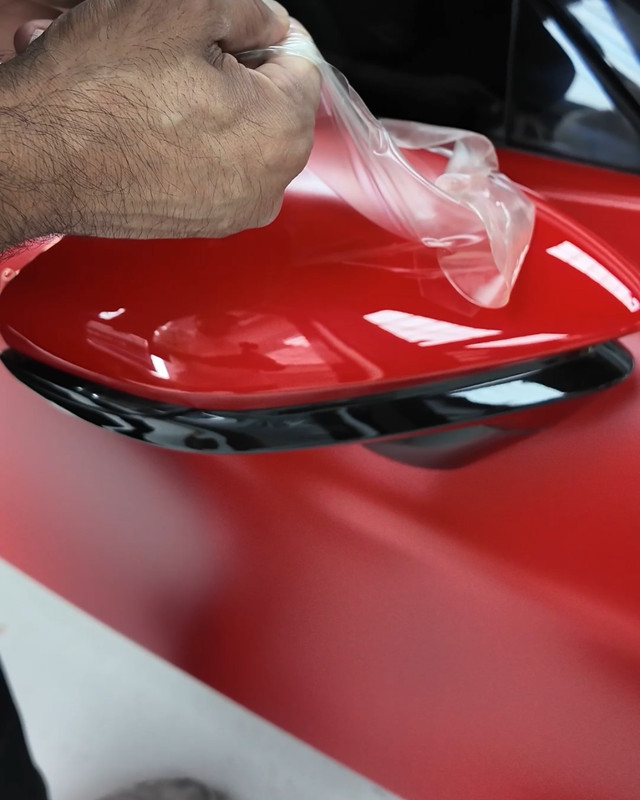
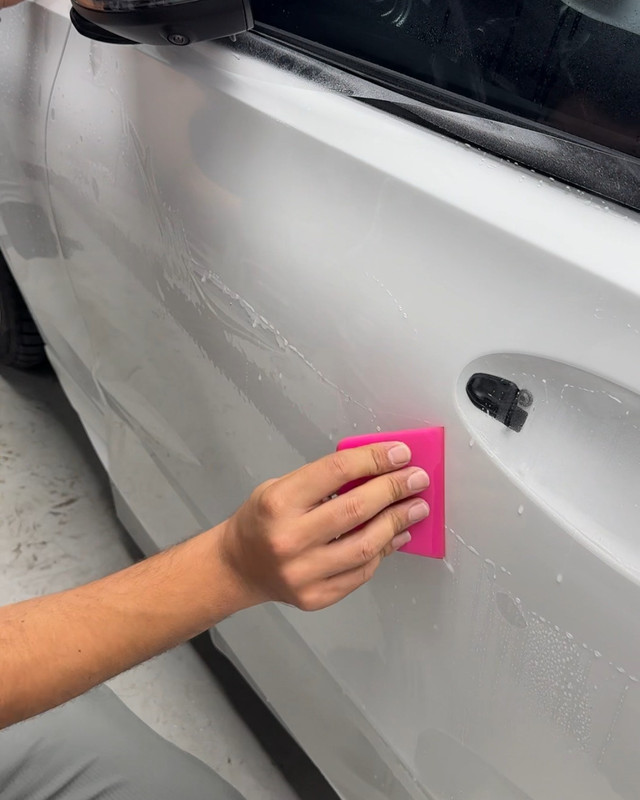
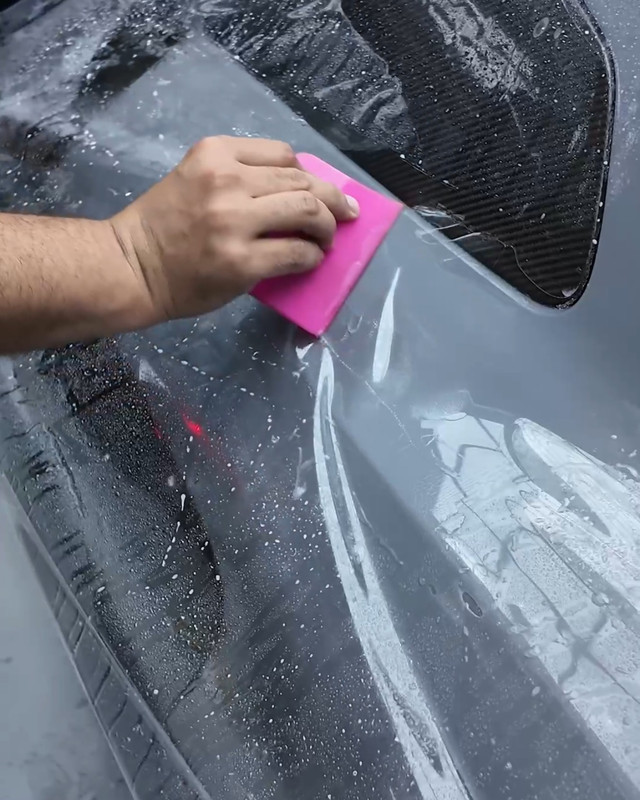
Questions
Is PPF worth it in Dubai?
Highways, sand and construction areas cause frequent stone chips. PPF protects the original paint, which also supports resale value.
Full body or front only?
Front coverage protects the areas hit most often. Full body protects every panel, including doors and sills. We advise based on your use.
Will PPF change the look of my car?
Gloss film keeps the original look. Matte or satin film gives a satin finish while protecting the paint.
How do I wash a car with PPF?
Wait the time we advise before the first wash, use a pH-neutral shampoo and keep pressure jets away from the edges. You receive written aftercare instructions.
Send your car model on WhatsApp and tell us which coverage you are considering.
Related services
Brands we work onPorsche →Ferrari →Lamborghini →McLaren →Mercedes-Benz →Range Rover →All brands →