
Transmission Diagnostics & Repair in Dubai
Automatic, dual-clutch and manual gearboxes — diagnosed from data, not replaced on suspicion
Pick-up and recovery available on request.

Harsh shifts, slipping or a gearbox warning light do not automatically mean a new transmission. We read the gearbox control unit, compare input and output speed sensors to measure real slip, look at clutch adaptation values, line pressure and valve-body response, and check the oil and the filter. Most workshops skip this step and quote a replacement, because diagnosis is harder than swapping the unit.
A gearbox is the component most often replaced when it should have been diagnosed. The control unit stores adaptation values and counters, the speed sensors let real slip be measured, and the oil and the pan show how much material has already worn away. Reading all of that takes time and equipment; quoting a replacement takes a minute. We prefer the first, because on most cars it is also the cheaper outcome for you.
What’s included
- Gearbox control unit scan: fault memory, adaptation values, counters
- Real slip measurement: input vs output speed sensors under load
- Line pressure, solenoid response and valve-body testing
- Clutch adaptation and re-learn (automatic and dual-clutch)
- Oil and filter condition; pan and magnets inspected for wear material
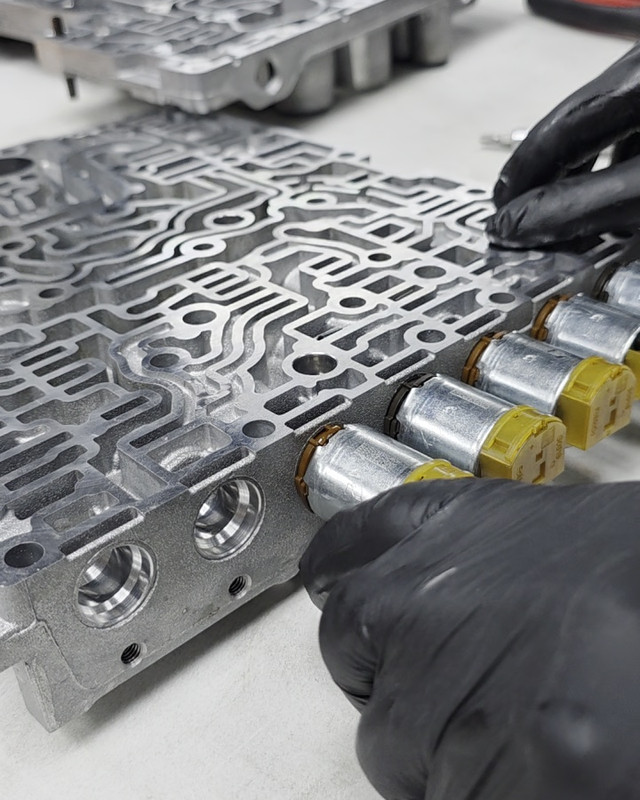
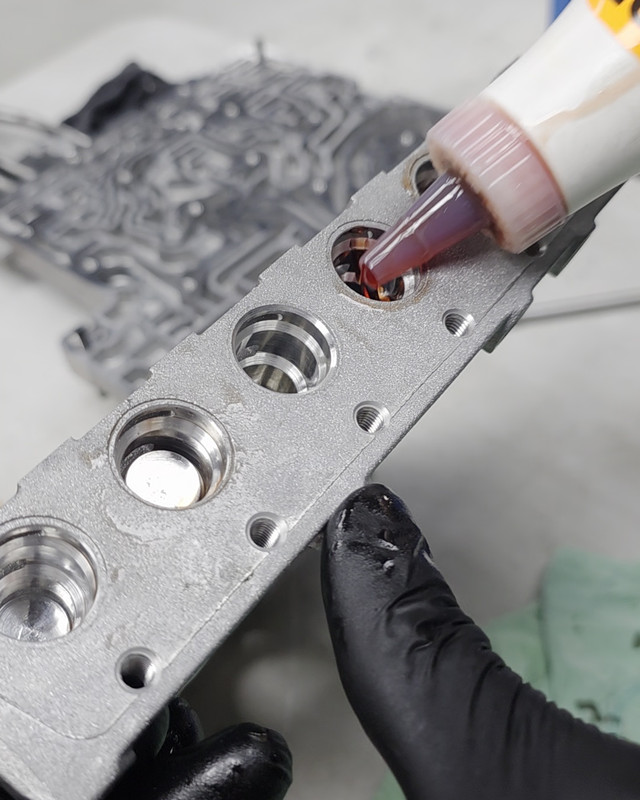
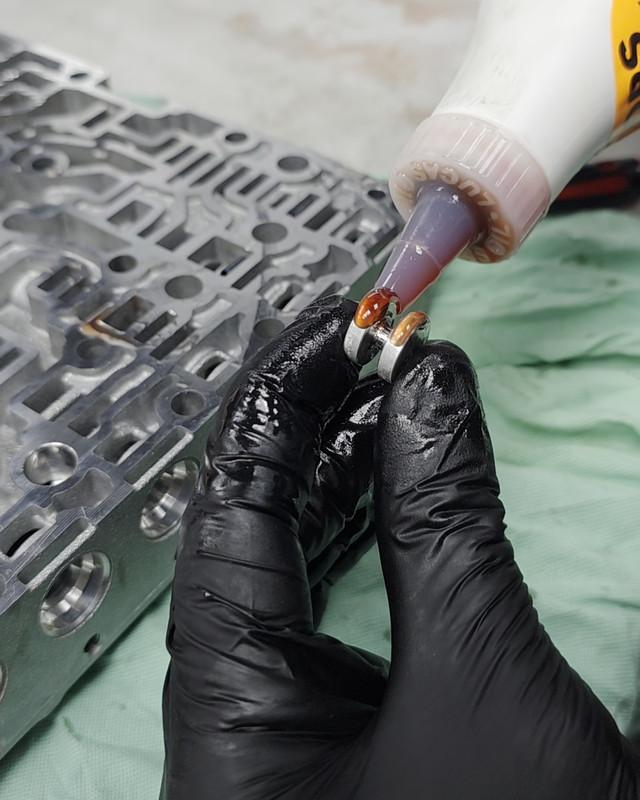
- Valve body, solenoid, seal and mechatronic repair
- Transmission oil service to the manufacturer’s specification and fill procedure
- Differential oil service, and Haldex / AWD coupling fluid and filter service
- Torque converter and clutch diagnosis; rebuild or replacement when the data supports it
See alsoEngine Diagnostics & Repair →Minor & Major Servicing →
How we diagnose a gearbox instead of replacing it
A transmission tells you a lot if you ask it properly. Four measurements do most of the work:
Slip. The input and output speed sensors give engine-side and wheel-side speed. Compare them against gear ratio and load and you get real slip — the number that separates a worn clutch pack from a control or hydraulic problem.
Adaptation values. Modern gearboxes learn: fill times, clutch pressures, shift overlap. Values pushed to the end of their range show the control unit compensating for wear or for low pressure long before the driver feels it.
Line pressure and solenoid response. Harsh, delayed or flared shifts are often pressure or valve-body faults — a stuck solenoid, worn bores, a blocked filter — and those are repairable units, not a reason to replace the whole gearbox.
Oil and pan. The oil’s colour and smell, and what sits on the magnets, tell us how much material has already left the clutches. Fine paste is normal wear; chunks and hard debris are a different conversation.
Only when these say the internals are gone do we talk about a rebuild or a replacement unit. That is the opposite of the usual Dubai answer, which is to quote a new gearbox on the first fault code.
Transmission oil: the myth we hear every week
“Never change automatic transmission fluid, it will break the gearbox.” This is one of the most expensive myths in the market, and it comes from a real observation misread: a gearbox already full of worn material sometimes fails shortly after a late first oil change — not because of the new oil, but because it was already at the end of its life.
Transmission fluid is a working hydraulic fluid. It carries line pressure, controls friction in the clutch packs and cools them. It oxidises with heat, and in this climate it runs hot: traffic, high ambient temperatures and towing all raise oil temperature, which is exactly what ages it.
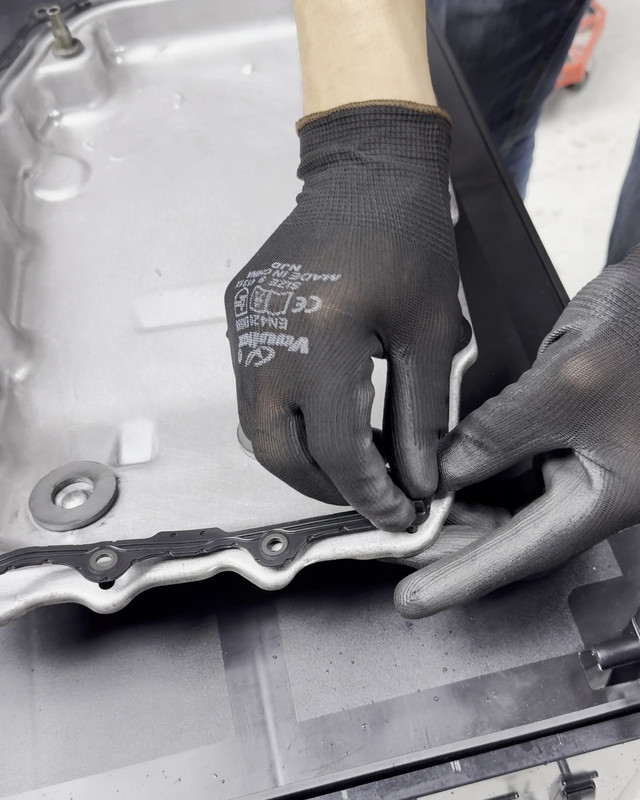
So we follow the manufacturer: the specified oil (never a generic “ATF”), the specified quantity, and the correct fill procedure — with the gearbox at the right oil temperature, through the correct level plug, because on most modern units level is set by temperature, not by a dipstick. Filter and pan gasket where the design includes them.
The same logic applies to the parts nobody remembers: differential oil, transfer case, and the Haldex or AWD coupling, whose oil and filter have their own interval and which fails quietly when they are skipped.
Our process
- STEP 01 / 05
Read
Gearbox control unit: fault memory, adaptation and counter values.
- STEP 02 / 05
Measure
Input vs output speed under load, line pressure, solenoid response, oil temperature.
- STEP 03 / 05
Inspect
Oil condition and the filter; pan and magnets examined for wear material.
- STEP 04 / 05
Repair
Valve body, solenoids, seals, mechatronic or clutch work — or a rebuild if the data says so.
- STEP 05 / 05
Verify
Adaptation reset and re-learn, then a road test against the measured values.
How we work on it
Sport, high-end and collector cars — and everyday cars that deserve the same care.
- Slip is measured, not guessed
- Wear material in the pan tells us how far the damage has gone
- A replacement is proposed only when the data supports it
From the workshop
Questions
My gearbox slips. Do I need a new transmission?
Not necessarily, and that is the point of diagnosing it. We measure real slip, read adaptations, check pressure and inspect the oil and pan. Valve body, solenoid and seal faults are repairable; only when the data shows the clutch packs are gone does a rebuild become the honest answer.
Should I change my automatic transmission oil?
Follow the manufacturer’s interval with the specified oil, quantity and fill procedure. The fear of changing it comes from cases where the gearbox was already worn out before the first change. Clean oil at the right interval is protection, not risk.
What about the differential and the Haldex coupling?
They have their own intervals and their own oils, and they are the items most often skipped. The Haldex/AWD coupling in particular needs its fluid and filter serviced, otherwise the clutch pack overheats and the system disengages.
Do you work on dual-clutch (DSG/PDK) gearboxes?
Yes — reading adaptations, clutch wear and mechatronic faults, with the oil and filter service to specification. The diagnostic approach is the same: data before parts.