
Brake Repair & Upgrade in Dubai
Brake repairs, fluid service and upgrades for road and track — measured, bled and bedded in.
Pick-up and recovery available on request.
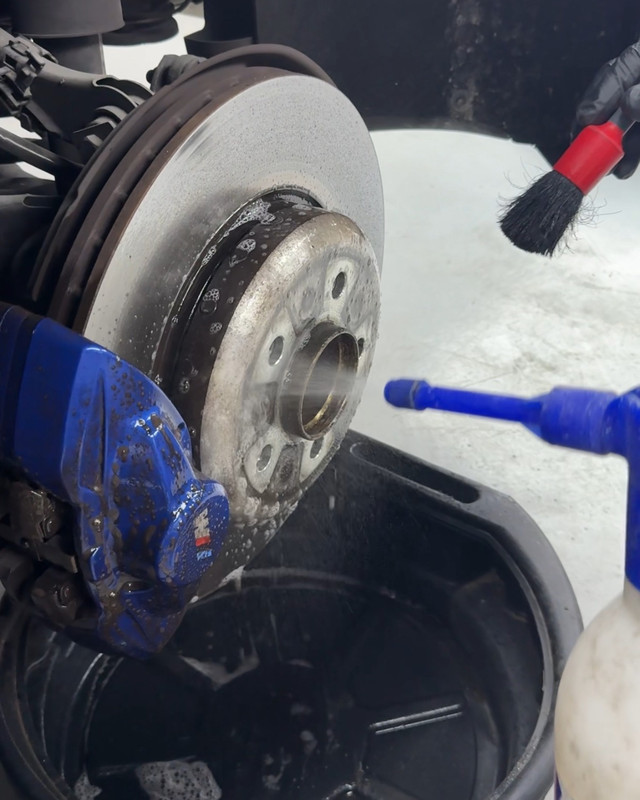
Brakes decide how safely and how consistently your car stops. We inspect and measure the full system — pads, discs, calipers, hoses and fluid — and repair it to specification. For performance and track use we upgrade pads, discs, lines and fluid to match the heat the car will generate.
Brake wear builds up slowly, so drivers get used to it: a longer stopping distance, a pedal that travels further, a vibration at high speed. Measuring against specifications removes the guesswork. It tells us what must be replaced now, what can wait, and what to check at the next visit.
What’s included
- Brake pads, discs and caliper service
- Brake fluid test, replacement and bleeding
- Brake noise, vibration and pulling diagnosis
- Brake hoses and braided lines
- Upgrades: performance pads, discs and big brake kits
- High-boiling-point racing fluid for track use (e.g. Motul RBF 660 or RBF 700)
- Bedding-in of new pads and discs
See alsoSuspension Repair & Upgrade →Performance Parts Installation →
Brake fluid: the part you don’t see
Braking turns the car’s kinetic energy into heat. Most of it goes into the discs and pads, and part of it reaches the brake fluid through the caliper pistons. If the fluid reaches its boiling point, vapour bubbles form in the caliper. Gas compresses, liquid does not: the pedal goes long and soft, and the car stops later. This is fluid fade. It is different from pad fade, where the friction material overheats and grip drops while the pedal stays firm.
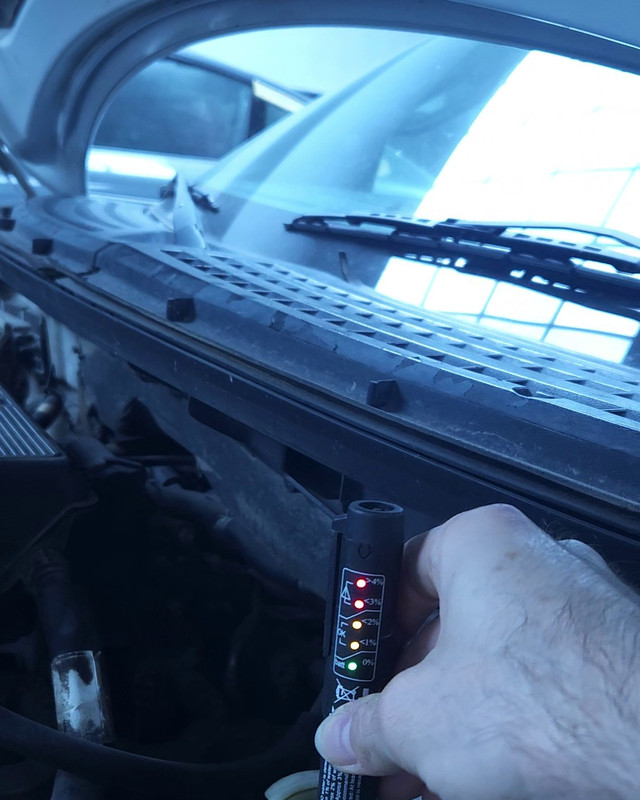
Standard brake fluids are glycol-based and hygroscopic: they absorb moisture from the air through hoses and seals, and water lowers the boiling point. That is why every fluid has two ratings: dry (new fluid) and wet (fluid containing about 3.7% water, as defined for DOT testing). A DOT 4 fluid must not boil below 230 °C dry and 155 °C wet. Fluid can look clean and still be well below its dry rating, so we test it instead of judging it by colour.
In Dubai, ambient and under-bonnet temperatures are high, so the margin between normal use and boiling is smaller than in cooler climates. Repeated high-speed stops, mountain roads or a track day can take the fluid close to its limit.
For track use we recommend a racing DOT 4 fluid with a higher dry boiling point, such as Motul RBF 660 or RBF 700. These fluids absorb moisture like any glycol fluid, so on a track car we check and bleed the system before each event. They must not be mixed with silicone-based DOT 5 fluid, and we flush the system completely when changing fluid.
Fluid is one part of the system. For track use we also look at the pad compound and its temperature window, disc size and condition, braided lines to reduce hose expansion, and brake cooling. New pads and discs are bedded in, so the pedal is consistent from the first hard stop.
| Fluid | Dry boiling point | Wet boiling point |
|---|---|---|
| DOT 4 (minimum requirement) | 230 °C | 155 °C |
| Motul RBF 660 | 328 °C | 204 °C |
| Motul RBF 700 | 336 °C | 205 °C |
Sources: FMVSS 116 minimum values; Motul technical data sheets.
See alsoSuspension Repair & Upgrade →
Our process
- STEP 01 / 04
Inspect
Pads and discs measured; fluid tested; hoses and calipers checked.
- STEP 02 / 04
Test
Road test for noise, vibration, pulling and pedal feel.
- STEP 03 / 04
Repair or upgrade
Worn parts replaced; upgrades fitted to specification.
- STEP 04 / 04
Bleed & bed in
System bled, pads bedded in, final road test.
How we work on it
Sport, high-end and collector cars — and everyday cars that deserve the same care.
- Measured, not guessed: thickness and fluid condition checked
- Fluid chosen for how the car is used — road or track
- Everything torqued to manufacturer values
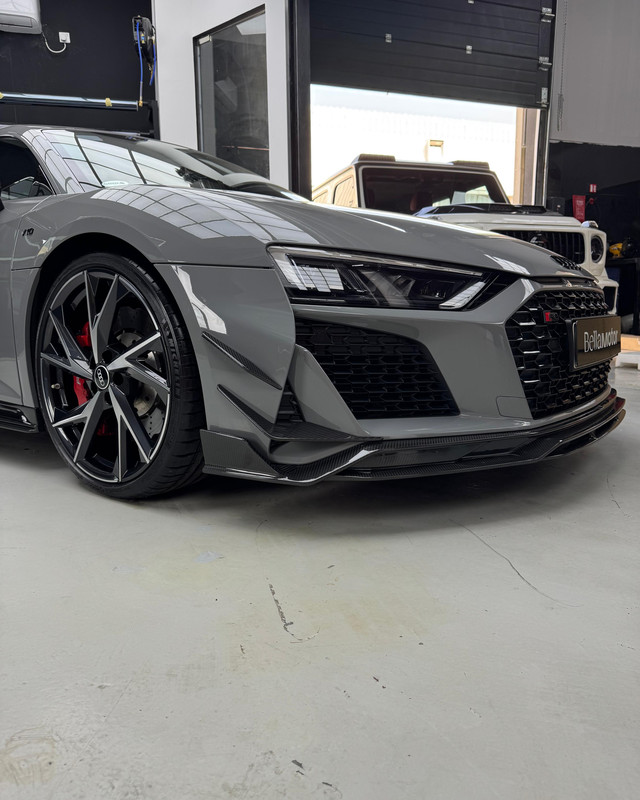
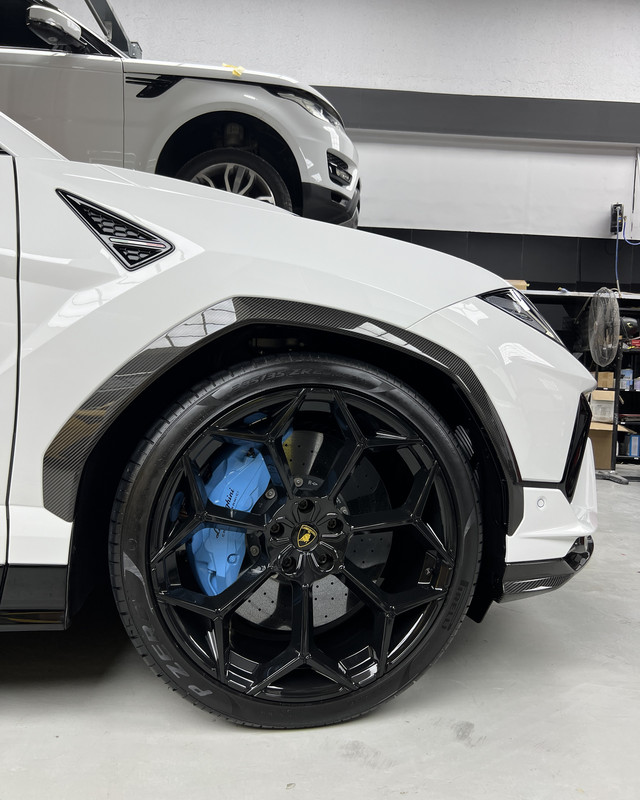
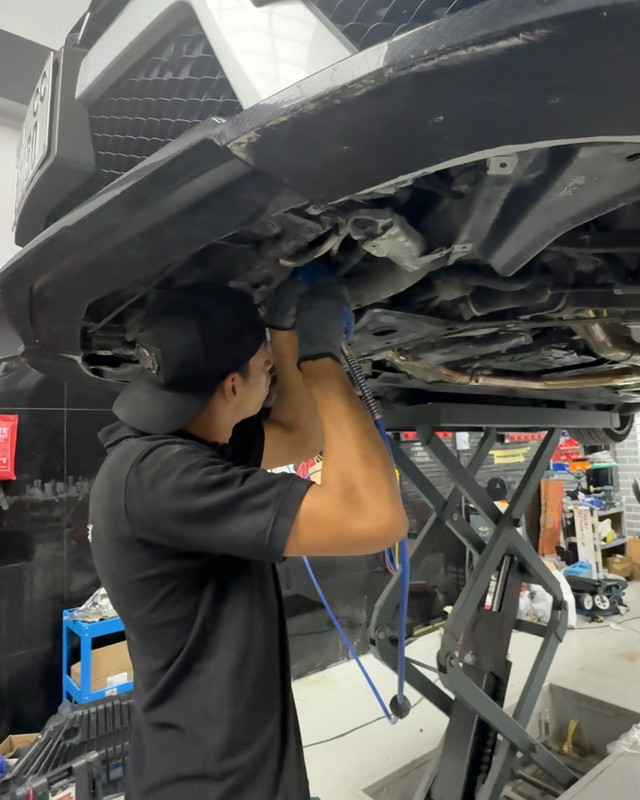
From the workshop
Questions
Why does my steering wheel vibrate when I brake?
The most common cause is uneven disc wear. We measure the discs and check the calipers before recommending new parts.
Do discs need replacing every time the pads are replaced?
Not always. If the discs are above minimum thickness and run true, they can stay. We measure and tell you.
How often should brake fluid be changed?
Follow the manufacturer’s interval — for many road cars it is every two years. Cars used on track need checks and bleeding much more often. We test the fluid and tell you where it stands.
Can you prepare my car for a track day?
Yes. We check pads, discs and lines, and replace the fluid with a high-boiling-point racing fluid where it makes sense. For ride height and damping, see our suspension page.